|
Permalink
Click for Larger Image |
Subject: Loyalty Day
According to Wikipedia, Loyalty Day was first observed on May 1st, 1921, as a counter to the growing influences of communism and anarchism on the American labor movement. In 1958 during the second Red Scare, Congress passed Public Law 85-529 declaring this to be a legal holiday — although one which is rarely observed. Wikipedia states:
In keeping with that tradition, on April 30, 2013, President Obama issued his own proclamation, once again declaring May 1st to be "Loyalty Day." Here is what he had to say:
But of course, as with all things Obama, there are interesting passages contained here that, in the name of this country's founding principles, turn those very principles upon their head. For example, Obama states:
Ignoring for the moment his appeal to faith rather than a conscious understanding and explicit agreement with our founding principles, what are some of those core ideas that he identifies?
Contrast this with the Pledge of Allegiance which speaks of "liberty and justice for all. Where did "equality" come from and what does Obama mean by that? When the founding fathers wrote in the Declaration of Independence:
it is perfectly clear that they are speaking of individuals who are separate from one another, but all of whom possess equal rights as an inherent aspect of their human nature—rights pertaining to their freedom and independence; rights which grant them the power to direct and control the course of their own lives. But this is not at all what Barack ("I do think at a certain point you've made enough money.") Obama means by equality. He is not promoting equality of opportunity to pursue one's desires in the manner of one's choosing. No, he is speaking of egalitarianism — of guaranteeing equality of outcomes. It is his intention to "level the playing field" by chopping off the legs of those that rise too high and using those severed limbs as a platform upon which others will be allowed to stand. And it the government, with him at the helm, that will be doing the chopping and deciding just how much to amputate. As is the case with all smart totalitarians throughout history, he doesn't plan to go to war with the population in order to extract his pound of flesh. Instead, he navigates the much easier course of simply issuing a call to sacrifice oneself on the altar of altruism, and then stands back as a majority of the sheep lead themselves to slaughter. When Obama speaks here of "our country's core: service and citizenship," or declares that Loyalty Day is "an occasion that asks something of us as a people," he is laying the groundwork to help confuse the latent positive feelings that people retain for the greatness of what remains of this country, and getting them to transpose those feelings towards the act of serving the needs of others at their own expense. And this is not some one-time occurrence, but a concerted effort and core goal of Obama's administration. Already he has declared both 9/11 and Martin Luther King Day to be National Days of Service. His never-ending call to serve can be found buried within most of his speeches, while more and more children of all ages are being forced to perform mandatory community service in our government-run schools as part of the federal Service-Learning initiative. And as I pointed out in my original article on National Service, the annual spending on the Corporation for National and Community Service has been drastically increased during The past five years, with an underlying goal of ultimately making National Service become a mandatory requirement imposed upon all citizens. When Obama declares:
he is counting on most people not being aware of the fundamental Enlightenment principles of individualism upon which our American history rests, and an uncritical acceptance of his replacement of our rights to autonomy and self-directedness with his collectivist notion of egalitarianism. Unfortunately, after many generations of a populace indoctrinated in government schools, he can now apparently get his wish. |
|
Permalink
Melissa Harris-Perry |
Subject: Whose Life Is It Anyway?
The provocative movie, Whose Life I It Anyway?, was released in 1981. It stars Richard Dreyfuss as Ken Harrison, a sculptor who is paralyzed from the neck down after a horrible automobile accident. When it becomes clear that he will never recover any additional use of his body and that his life is reduced to nothing more than the care that is offered by others, Harrison decides to end his life. However his wishes are blocked by those opposed to euthanasia and suicide. The story depicts the struggle between two views of life and confronts the question of whether Harrison—or any of us—are truly the ultimate masters of our fate, holding an absolute right to direct and dispose of our own life as we see fit? Many other films such as The Truman Show, The Matrix or Dead Poets Society explore the question of the level of control that we actually exercise over our own lives, but none is so explicit as Whose Life Is It Anyway? In each of these stories, the underlying conflict is that of individualism versus collectivism: Do we, as individuals, possess the exclusive sovereign right to determine the course of our life, or are we in some way subservient to a collective group which holds sway over us and may dictate requirements and actions that must be obeyed, even if they violate our desires and will? To state the issue plainly, the simple question is, "are we free or are we slaves?" This country was founded on the enlightenment principle of individualism. The Declaration of Independence states in no uncertain terms that each person possesses rights, and that "among these are Life, Liberty and the pursuit of Happiness." And not only do we possess these (and other) rights, but they are "unalienable", meaning that they are an inherent, absolute and unassailable part of our nature as individual human beings. Nothing could be made clearer, and yet, as time has passed, fewer and fewer people in this country understand and adhere to these fundamental truths. Bit by bit, the age old principles of collectivism have reasserted themselves and are now poised to destroy the essence of what has made America unique in the history of the world. It was not so long ago that statists had to make an effort to disguise their underlying principles and endevour to sneak them in beneath the conscious awareness of a public that still retained an American sense of life — by which I mean a respect for the virtues of self-motivation and self-responsibility, a belief that hard work was the source of reward and advancement, and an expectation that everyone was entitled to keep and dispose of that which they earned. However, six terms of Clinton, Bush and Obama, coupled with another two generations having been indoctrinated in government schools, has transformed the values of our society such that the cockroaches may now skitter about in the bright daylight without fear, openly spouting their collectivist goals. For example, here is Melissa Harris-Perry in a promotional spot for MSNBC, waxing on about a few collectivist notions which are to her, apparently, self-evident.
Well, like all progressive leftists, she stands on the shoulders of FDR and his Second Bill of Rights, proudly declaring that everyone has a "right to healthcare, and to education, and to decent housing, and to quality food, at all time [sic]," while neither bothering to ask who is responsible for providing and paying for these goods and services (the answer is "the collective"), nor considering what the implementation of these so called "rights" do in undermining the original inherent rights possessed by all individuals. Oh well, no time for that as you "Lean Forward!" The other standout line was:
we think that they should earn a little more" Be self-sufficient, be responsible, make a major contribution, and the unspecified collective "we" just might decided that it's OK for you to earn a little more. Just how much? "We" will get back to you, but you can certainly forget about that 1% nonsense! These sorts of views have become pro forma in the Obama age, but a new spot that recently aired, stretches into new collectivist (at least for the U.S.) territory.
Wait! What was that? Could you please run that by me again.....
Ten years ago, would anyone on a major network have dared speak these words and then expected to retain their job? What a difference a decade makes. When conservatives argue that the institution of family is under attack, you have to look no further than Melissa Harris-Perry to see that it's true. And there's no longer any need for subterfuge. It's collectivism brothers and sisters, and we're proud of it! The state reigns supreme and individuals—whether adult or child—belong to us, to do with as we please. Well, there was justifiable blowback from all quarters once word concerning this piece made the rounds, and Harris-Perry was forced to respond.
While there were a few patently disingenuous attempts to misrepresent some of the source of outrage being directed at her video, on balance I thought that Harris-Perry did a pretty reasonable job of identifying the actual core issue in this debate, while laying out her personal world view. Here is an excerpt:
Well, it is good to see someone on the left at least identify and acknowledge the existence of the individualist viewpoint, even while going on to dismiss it without presenting any substantive arguments, just as she offers no reasons in favor of the "collective responsibilities" position, apparently expecting us to simply observe that it is self-evidently correct. This is a window into the state of today's culture—where viewers of programs such as this wait to be instructed in how and what to think, without the need to burden themselves with facts, rational analysis or the mental integration of thought into fundamental principles. Such a process would demand answers to a variety of questions, starting with:
The previous vidio clip is an abbreviated version of a longer segment that can be viewed here. Starting at the seven minute mark there is a panel discussion which includes Matt Welch, the Editor in Chief of the libertarian Reason Magazine. Now, of course, Welch has been selected to present the "opposition" point of view, for exactly the same reason that NPR relies upon David Brooks to represent the "conservative" viewpoint—because both can be counted on to concede the progressive premise on most issues. Nevertheless, it is instructive to watch the first few minutes of this discussion in order to see precisely how not to defend liberty. Here is an excerpt of Welch's comments:
While Harris-Perry has just laid out the philosophical question of individualism versus collectivism and continues to try and steer the conversation back towards this topic, Welch falls over himself conceding the existence of a "social contract" that binds us all to one another with a communal duty, while granting that the state breached the sanctity of the family unit long ago and there is nothing left to discuss on that subject. Welch is not interested in defending the individual rights of the child against compulsory indoctrination, or the individual rights of the parent to determine the best course for their child's development, or the individual rights of the taxpaying adult that is forced to fund the education of other people's children. Instead, his concern lies with more pragmatic matters: the economic efficacy of education spending. In the cause of freedom versus slavery, Welch effectively argues for the latter and Harris-Perry wins, by default, in a TKO. So we return to the original question: Whose life is it anyway? If you're waiting for someone like Matt Welch to defend your right to exist on your own terms, then I'm afraid you have already lost the battle. It's up to you to get vocal in identifying and demanding your rights. Speak up at every available opportunity. Do not allow the collectivists like Melissa Harris-Perry to go unchallenged. Whose life is it? "It's MY life. Keep you mitts to yourself and get out of my way!" |
|
Permalink
Rand Paul |
Subject: Action Alert
If you are not already concerned, then you haven't been paying attention! We now have a government that has gone mad with power and has no hesitation in mowing down any pesky constitutional concerns that still get in its way. Rand Paul has drawn a line in the sand and is taking a firm stand for limiting the government to its ennumerated powers and for protecting all of our rights. This filibuster is a symbolic act, and a very important one. The question is will the administration be forced to concede that their are limits to its actions, or will this filibuster simply fizzle out and soon be forgotten, along with the last remnants of our rights. You can either sit back and wait to see what happens, or you can place yourself on the front lines and act to support this effort. I am asking everyone who reads this to act — and act immediately to provide support for what Rand Paul is doing. First, you can visit his Facebook page and adding your voice to the may others who are standing behind this effort. Follow this by going to his Senate Contact page, and leaving a personal message expressing your support for what he is doing. And then, most importantly of all, write a letter to the editors of your local papers, letting them know that there is considerable grassroots support for what Paul is doing—and why he is doing it. Contact like-minded friends and family and see if you can convince them to contribute their voice as well. In the big scheme of things, this may seem like only a small and inconsequential act, but I say that it is the first of many to come. Let's make this one count for all that it is worth!
For those interested, the filibuster can viewed live on C-SPAN2 Thanks to all of you for your willingness to fight for the cause of liberty. It means a great deal to me. UPDATE:
|
|
Permalink
Sunset or Sunrise? |
Subject: Have You Shrugged Your Country Today?
but be wise enough to stand together when the time comes. — Mark Amend The Loss of the American Spirit
America was different: Liberty, sir, was the primary object. — Patrick Henry At a monthly meeting of a group of liberty-oriented people, when the subject of the recent election came up, the speaker asked the audience, "How many of you are still on suicide watch?" I believe he was only half joking. I have taken some time since the November 6th election to reflect on the outcome, while trying to formulate a new perspective on the state of this country and where I stand in relation to it. These are some of my thoughts. Ayn Rand wrote about a person's "sense of life" as being the integrated sum of their basic values. She also said:
In 1971, what qualities did Rand see as forming the basis of the uniquely American culture? The independence of self-made, self-reliant, self-confident individuals; a common sense respect for knowledge; a trusting, generous and benevolent spirit; and an innocence as to the depth of evil that could exist in others. Fourteen years after publishing Atlas Shrugged, she still maintained a guarded optimism regarding America's future when she penned the following warning:
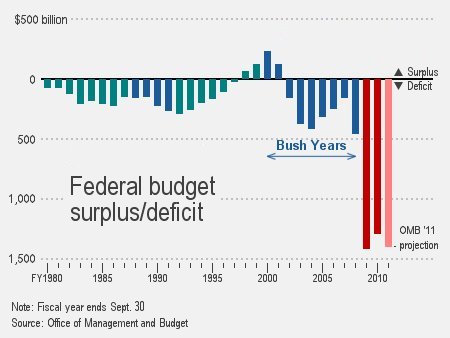
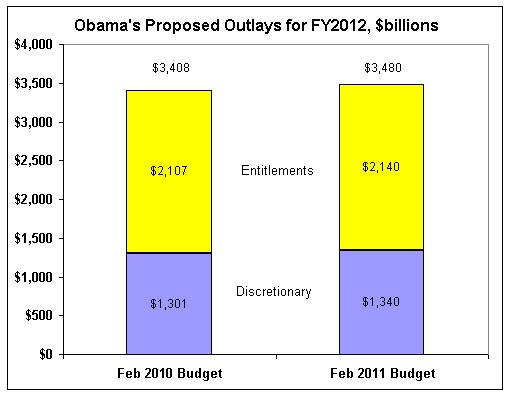
Here we are, forty years later, living in a country with a population that has increased 54%, from 203 million in 1970 to 313 million today, having imported all manner of cultural ideologies from other parts of the world. During that period, two more generations have pass through a decidedly left-leaning, government-controlled, educational system. And consider the increase in the size and scope of government, based upon these numbers from the Office of Management and Budget (OMB):
Not only has total government spending increased by 228%, but there was a dramatic shift in allocations from other areas into Human Resources—which includes all of the welfare and entitlement programs—roughly doubling the percentage of the populace whose lives were, to some extent, directly dependent upon government-enforced wealth redistribution. Rand's hope that Americans would continue to live up to their unique heritage of liberty and individualism has not been realized. And nothing drives that fact home with more power than the results of this past election. Writing at American Thinker, Daren Jonescu concluded that the 2012 election was "a referendum on the principles of modern civilization itself". I agree. While I do not think that the election was the actual tipping point for this country—I'm afraid that that event occurred a while ago—it certainly was the symbolic marker of our entry into a new era where concerns for the last vestiges of individual rights have been set aside by a majority of voters. If we are to move forward from this point, it is critically important that we squarely face the truth concerning this fundamental shift that has occurred in our country and incorporate that knowledge into all future strategies.
What this all means is that without a unifying spirit (i.e., a shared
sense of life) to provide a common bond, it becomes more
difficult to organize the populace towards common goals. The reduction
in the ability of the average person to reason deeply, combined with an
education that is woefully deficient in a basic understanding of recent
American and world history, make it problematic whether one can
successfully communicate complex political ideas to a wide audience.
This also leaves people much more susceptible to misinformation and
lies. When you couple all this with a growing sense of suspicion,
resentment and sometimes outright hatred towards others, then
organizing a majority of people for any purpose becomes nearly
impossible. Unfortunately, these are the conditions we face today.
Lessons from the 2012 Election
But when it came down to the wire I called my family to my side Stood up straight, threw my head back, And I lied, lied, lied In a post-election analysis, Thomas Sowell wrote:
Sowell is a great thinker, but here he shows precisely what is wrong with the Republican party and the conservative movement. While his first point concerning the need to clearly identify the rotting essence of Obama's core philosophy is correct, it is irrelevant to evaluating Romney's election performance. Romney did not fail to rout Obama because he is too nice. He refrained from attacking because, at his own core, he agrees with everything that Obama stands for. It is true that Romney had no "coherently articulated vision," but had he been able to formulate one, it would have been indistinguishable from his opponent. There is nothing special about Romney—he is just another in a long line of marketable mouthpieces for the loose "me-too" ideology that defines the GOP. And so long as conservatives continue to blind themselves to this fact and look for ways to excuse Republican ineffectiveness in one case after the next, they will simply be squandering their time, effort, money and hopes for a better future on a party that has designed itself for, and pledged itself to inevitable defeat. And do not expect to see the Republican party reformed. To present a vision that opposes the progressive agenda requires articulating some basic truths which are unpleasant, and to a large extent the general public is not interested in this. Instead, a majority now crave the "Big Lie" which evades our current sociological, economic and political reality by replacing an awareness of troubling facts with a fear-soothing story—a narrative—offering safety, entitlement, and full-time, cradle-to-grave care emanating from The Great and Powerful Oz—or as he is known in these lands, Uncle Sam. Both Republicans and Democrats lust after Oz's power as much as the public wishes to suppress its own fears. And so, working hand in hand, the power-seekers and the fearful will continue to embrace this fairy tale view, right up until the moment of immolation. And that is the real and important message of the last election. Just how far will the GOP go in service of the "Big Lie?"
While there are a few elected Republicans in Congress that, somewhat inconsistently, take a stand for individual rights and speak the truth when the Emperor clearly has no clothes, the great majority remain committed to the party ideology that produces results like those above, and that is unlikely to change in the near future. Despite having had four years to observe the practical consequences of the Republican's inability to deal effectively with Obama, not only was a McCain clone nominated in order to lose once again, but the voters decided that it was important to send 89% of the running Republican incumbents back to Washington. While Tea Party forces might ultimately be able to effect a slow change within the GOP, the past two election cycles have shown that whatever can be achieved through these political means will be too little and come much to late. If the Republican Party cannot be effectively salvaged, then what about the possibility of an alternative third party rising to replacing it? While this has certainly happened in the past—the Republican Party itself replaced the Whigs in 1860—this appears unlikely in today's climate. In 2012, the strongest alternative to Obama and Romney was Gary Johnson. Yet, despite having performed over twice as well as past Libertarian presidential candidates by garnering 1.28 million votes, this still amounted to less than 1% of the total vote and failed to influence the outcome in even a single state. If this is the best that could be accomplished after forty years of Libertarian Party effort, I think we can dismiss this as being any sort of hopeful prospect in the near future. It was Ayn Rand's position that political change could only come about after the culture—the predominantly accepted ideas by a majority of people—had first been transformed. I agree. Rand presented her philosophy through novels in order to dramatize and communicate to the widest possible audience the implication of certain fundamental principles in action. Over the past fifty years Objectivist scholars and intellectual activists have devoted a significant effort to spread an understanding of exactly what provides the necessary foundation for freedom, individual rights and limited government, and it is undeniable that all of these efforts have had a very visible and positive impact upon a great many people. And yet, despite all of those years devoted to educating our society about the value, source and meaning of freedom, on November 6th, a majority of people went to the polls and sent a clear message that liberty was no longer their predominant value and therefore no longer their goal. With their ballots they proclaimed that they had formally switch allegiance from an implicit philosophy founded upon individual sovereignty and personal responsibility to one of collective subservience in exchange for relief from any accountability. Unfortunately, despite heroic measures, the past methods used by Objectivists have been unsuccessful in changing the direction of our culture. And if we cannot look to a better educated populace which has been made consciously aware of the forces currently at play in our society, it is equally foolish to expect to rely upon the general common sense of even a minority of voters. In an article titled, Virginians Vote to Defend Property Rights, Ari Armstrong discusses how, in the last election, 82% of the state's citizens voted for a constitutional amendment to limit the abuse of eminent domain, while at the same time voting 51% for Obama, and concludes that this:
Oh, were that only true. But isn't this conclusion simply wishful thinking? No one that actually cared about property rights could possibly vote for Obama, the great nationalizer, if they were at all conscious of what has occurred in this country over the past four years. Yes, people are voting for this amendment, but it is not an actual respect for property rights that is driving many of them. Or consider the call to reduce federal spending. The most vocal group demanding significant cuts are the Tea Partiers. Yet, according to this Wall Street Journal article:
There is no common sense operating here. Disaster knocks at the door and yet most people refuse to consider even semi-realistic half-measures let alone real solutions to these problems. The longer we continue to rationalize the actions of the general public to fit our desire to find breakout flashes of true rationality, the longer we waste our time hoping that they will, as a large group, be convinced to see the light and become mobilized as a positive force for political change. As I stated above, it is time to accept the fact that a majority of U.S. citizens have implicitly chosen collectivism, while certainly failing to comprehend the full consequences of that choice.
Just as our economic system is in a significantly mixed state as it
continues it progression away from free markets towards centrally
planned interventionism, our social-political system is also a
mongrel, incorporating remnants of freedom along with rapidly expanding
elements of totalitarian control. While these trends have been
observed developing over a long period, for many, there has been an
ongoing assumption that there was still time to work within the system
to alter the ultimate outcome. Another critical lesson of this
election has been to signal that the time for that approach has now
expired. When living under a government of strict,
constitutionally-limited powers, with a court system that objectively
identifies and upholds individual rights, it remains possible to affect
change by way of the ballot box. But once a country has significantly
transitioned into collectivism, with a relatively unconstrained
totalitarian polity that holds the individual subservient to the
state's interests, then the idea that one's vote is an effective
tool in the cause of liberty becomes just another aspect of the
"Big Lie"—the soma—being
dolled out by the entrenched political masters to keep their subjects
pacified
by false promises of empowerment and control.
It's Time for a Change of Plans
over again and expecting different results — Albert Einstein The world of even a little more than a decade ago has significantly changed and we are now fighting a different type of battle—one that is going to demand the adoption of a completely different strategy from those of the past. Understanding this requires a recognition of three points I addressed in the previous two sections:
This is not to say that we should forsake trying to influence the type and quality of political candidates elected, or that we should abandon efforts to educate as many people as possible to the philosophical principles that freedom requires. The point is that we can no longer make these activities the primary focus of our efforts if we are to have any hope of salvaging our future. There is a fundamental mistake lying behind the assumption that we must first educate a large enough group of people to value and respect rights, freedom, capitalism and personal responsibility, and then convince them to join with us in voting these things back in as the "law" of the land. In some ways, this is a collectivist error that implies that these things are dependent upon—that they rise and fall—with the attitudes of society as a whole. We are speaking about individual rights here, and as the Declaration of Independence so clearly points out, our rights are inherent and unalienable. Or as Ayn Rand formulates it:
a majority has no right to vote away the rights of the minority." If this is something that we truly accept, then there is no need to beg others to help us obtain, or grant us permission to exercise our rights. All we must do is choose to assert them. A clear awareness of this choice is the change that needs to occur in order to chart a new course forward. Politics is a homeopathic undertaking that dilutes the effectiveness of every participant down to zero. Instead of accepting the rules of this game which has been crafted solely for the benefit of those in power, we must reject the political system and begin acting with independence, taking back control over our own lives and directly pursuing our own values in a manner that makes the achievement of success possible. And while, on the global stage, the action of a single individual often may not be seen producing a measurable result in itself, the aggregate of many people working towards small but real change can add up to something significant and extremely important. Independent action must always be carried out with care and intelligence, taking into account the current context and state of our society. On the other hand, calm intellectualizing about issues is never going to get the job done. What is required is a proper fusion between the intellect and the emotional. Passion is what motivates action, while rationality is what insures meaningful results. I would suggest that up to this point, we have been far too accommodating in our response to events that have transpired during just the past two administrations. In that short time, along with a great many other things, our government has saddled us with:
Given the abrogation of our rights, the curtailment of our freedoms, and the wholesale theft of our property, both present and future, we have every right to be, not just mad, but furious! And while there is certainly a growing level of resentment and disgust occurring across the country, there is nothing like the appropriate level of anger being expressed. I'm encouraging everyone to consider the list above and the impact that these things have on your life. How do they curtail you freedom of action? How do they rob you of opportunities? How do they destroy the pursuit of your personal happiness? What are the eventual implications of each? Then I want you to get Mad As Hell and, like Howard Beale in Network, let everyone know that You Are Not Going to Take it Anymore!
Never lose your head, but do unleash your passion and allow it to motivate you to act in any and every way possible to push back at the forces that are actively working to destroy freedom by replacing your right to pursue your own life as you desire it, with an imposed and open-ended obligation to society—which is government Newspeak for being relegated to the status of a slave. We cannot afford to dilly-dally while waiting for some nascent cultural change that is not going to arrive in time, if ever.
Independent action is our last remaining line of defense. If we
do not stand up for ourselves, no one else is going to do it for us.
Don't Take it Lying Down
degree a reflection of the relative determination of the subjects to be free and their willingness and ability to resist efforts to enslave them. — Gene Sharp I was recently introduced by a friend to the political scientist, Gene Sharp, who has devoted his career to the study of nonviolent resistance directed against tyranny. Drawing upon his studies of the thoughts and actions of political activists and thinkers such as Gandhi, Thoreau and others, Sharp distilled out his theories for effective nonviolent resistance and presented them in his writings, as an organized strategy. The 2005, 600 page Waging Nonviolent Struggle (WNS) is a comprehensive volume detailing his latest thinking on the subject, while the slender From Dictatorship to Democracy: A Conceptual Framework for Liberation, (DTD) first published in 1993, is more a handbook for those interested in the practical aspects of mounting an effective opposition to despotism.
While the United States has not yet reached the level of political dictatorship that has and continues to be observed throughout many parts of the world, as I and many others have passionately argued, we are on an accelerating path with clear historic parallels that, if unchecked, will inevitably lead to this result. In reading Sharp's books, I was struck by a number of strategies that could also be applied to the battle in which we are currently engaged—strategies that could be just as effective in derailing our totalitarian train without first having to wait for it to reach its final destination. In what follows, I will share some passages from DTD and discuss how they might apply to our struggle to restore freedom in America. Sharp starts off by making a few observations about the futility of attempting the wrong sorts of actions.
Remember that in his writings, Sharp is talking about full blown, repressive dictatorships as you would find in places such as China, North Korea or Cuba, so we need to scale back some of the rhetoric a bit to fit our circumstances. Nevertheless, there are critical points being made here that certainly concerns us. One of the most important observations is that energy, resources and hope invested in actions that fail to produce meaningful results can actually be counterproductive, leading to dispare and demotivation. Take for example the rise of the Tea Party movement that began about one year into the Obama administration. This grassroots undertaking lit the fire of activism under many people and steadily gained momentum, resulting in a series of successful protest rallies across the country, massive letter-writing campaigns directed at congressional representatives, while propelling otherwise non-political people to become actively engaged in the campaigns of 2010 and 2012. And while a very respectable level of results were achieved by these efforts, the overall effect was still extremely disappointing for many, and the movement is, unfortunately, now only a shadow of what it once promised. Another of Sharp's points is that, while answering government force with force can be emotionally satisfying, it is imprudent since it is playing to totalitarian strength, not its weaknesses. As I previously noted, passionate emotion is critical to providing the necessary motivation to act, but is of no use if those actions are headstrong and foolish. Sharp delineates four tasks that are required in order to take down a dictatorship:
Refer to DTD for a full explanation of what is implied by each of these points, but whether your intent is to dismantle a dictatorship or to turn a country on the brink of becoming a socialist welfare state back towards freedom, Sharp is saying that it is a monumental task that requires serious commitment, coordination and planning. In the United States, very little in the way of these four points have been addressed by those committed to liberty. Instead, the actions taken so far have been sporadic, ad hoc, and uncoordinated. I do see recent and encouraging signs that, to a limited degree, things are improving. However, without that "wise grand strategic plan for liberation," I agree with Sharp, that success is unlikely.
It is very encouraging to see that Sharp is no moral relativist. He believes in standing firm and fighting for one's fundamental principles—something that should be well appreciated by Objectivists and libertarians alike. And now we get to the thrust of the books—the use of political defiance as a powerful tool to fight back against, and ultimately slay totalitarianism. Sharp next analyzes the source of true power, which is briefly summarize in the following excerpts:
Here Sharp points out that much of the rulers' political power actually rests in the hands of the populace, and through non-cooperation it can be withdrawn. Again, this should sound very familiar to Objectivists as it is really nothing more than an application of Ayn Rand's principal of the Sanction of the Victim. When enough individuals realize that they actually hold the power, then the jig is up for all authoritarians! Karl Deutsch also shows us that while governments may hold the majority of cards when it comes to the ability to wield force against its citizens, that force may only be of limited use, as resistance builds quickly in proportion to the level of force employed. This is even more true in the case of America, where there is still a reasonably strong expectation of rights and where those rights still remain in effect to some degree. The current push-back against encroachments on the second amendment is a good example, where even the discussion of using the power of government to restrict or collect firearms from private citizens is creating a furor.
Almost every item on the list above applies to our government, and each can be exploited to good effect, given a well thought out and coordinated overall strategy. Recognition of this fact should be very empowering to activists striving to restore liberty!
Sharp provides the framework for the design and execution of campaigns which have been successfully applied in the past to battle oppression. His books are filled with many specific suggestions and are well worth reading by anyone interested in further thinking on this subject. However, he constantly returns to the most important point: that ultimate success can be measured in proportion to the advance work done in preparing a well thought out plan.
There is a lot of truth conveyed in these few paragraphs. It is time for people to decide whether or not they are really serious about fighting for their freedom, or are mearly content to complain about its loss. And if the choice is to fight, then are they willing to take the steps that are realistically required of them in order to be successful in their pursuit?
Objectivists, libertarians and many conservatives understand that
democracy is a fatally flawed goal, and that a properly
implemented constitutional republic, founded on a respect for
individual rights and which strictly limits the power and scope of all
government, is what is actually required. Nevertheless, the points
Sharp raises remain fully applicable. It is never enough to fight
against something. One must be able to articulate what one is
fighting for, and always keep a vision of that positive goal
in mind as the driver of one's actions.
An Example of How Small Actions Can Produce Large Results
— Orson Scott Card
And I hope you can see how this little act implements many of the strategic points that Sharp identifies as effective means of resisting despots. I also hope it is clear how similar strategies could be developed to resist the totalitarian acts of our government. Consider the many ways that our current political system disrupts your life, and try to think up small ways that you can become the pebble in the shoe of our politicians and the sand in the machinery of our government. Then find ways to spread your ideas to others so that they can join in and help turn a minor annoyance into a serious impediment.
If you found Card's little story interesting, then you might like to
read just the introduction to Chapter
12: Putting out Fires, where Han Tzu, the Chinese military
strategist, come up with his own plan to address the "flag of India."
And this shows exactly why Thomas Jefferson was correct when he
observed that, "The price of freedom is eternal vigilance."
Because there is always someone, right around the corner, who is
actively working to undermine your right to be free.
The Right to Your Rights
Stand up for your rights. Get up, stand up, Don't give up the fight. — Bob Marley Over the past 100 years, We, the People of the United States, became complacent and allowed our freedoms to be taken from us, bit by bit. It probably started in 1788, soon after the adoption of the U.S. Constitution, but the clearance sale didn't really take off until 1913 when Woodrow Wilson nationalized the banking system, launched the income tax, and reintroduced the military draft, among other serious transgressions. This was the point when the citizens should have rightfully risen up in revolt, just as the colonists had done at the original Tea Party rebellion. But instead, by accepting these gross violations of our rights with quiet resignation, a signal was sent that this, and more, would be tolerated. And "more" was soon to follow, and then "more" after that, leading us to the sorry place we find ourselves today. We must throw out all of the rationalizations and accept the plain fact that the true fault lies neither in the actions of politicians, nor in the structure of government, but in the failure of enough free citizens to act in the manner necessary to demand an uncompromising respect for their rights. Our rights have become devalued because we stopped valuing them ourselves! Ayn Rand wrote:
Failure to take action in defense of one's rights is a clear statement that they are not considered worth defending. Having assumed that position, it is no wonder that others then refuse to honor them. They are merely following your lead. So here we are, and as Dirty Harry might put it:
Assuming that the answer is "Yes!," then it is now up to us to fight for and retake that which is our birthright.
The next question then becomes: "Exactly what are you willing
to risk, invest and do to ensure those rights?"
Pushing Back
rebels — men and women who dare to dissent from accepted doctrine. — Dwight D. Eisenhower Once again, quoting psychologist Michael Hurd from another excellent article:
This is certainly something to ponder. Do not be one of those who has assumed that there is nothing that you can do. Don't sit back, hoping for a white knight to rescue us from the advancing calamity. Be an active participant in "the story of our time" and help move us towards a positive outcome. But let's learn from our past mistakes, and be sure that we adopt a sounder, more effective strategy as we move forward. Yes, the last election showed us that a majority of people (at least of those willing to vote) have chosen collectivism over individualism. However, that is only a small majority—which means that something like 48% of people do not actively support the current trend—which means that, with the proper incentives, there are up to 150 million people who might be recruited into a visible and vocal protest movement. As Samuel Adams famously said:
tireless minority keen to set brush fires in people's minds." From among that deep pool of potential recruits, our task is to locate, activate and coordinate the important minority still in possession of that evaporating American Spirit, and who, like the Founding Fathers, are still willing to "mutually pledge to each other our Lives, our Fortunes, and our sacred Honor" in the service of liberty. For it is this small group who will make all the difference by leading the way, blazing the path which many others will then follow. Earlier, I said that I agreed with Rand's position that cultural change must necessarily precede political change. To restore a political system that truly upholds freedom and rights, it will be necessary to alter the fundamental moral basis of society, moving it from its current implicit and explicit message of self-sacrificing altruism to one promoting self-actualization, responsibility, and personal happiness as virtues. And this is why I support the actions of the intellectuals who are planting the philosophical seeds that will yield long-range result.
However, there are other more immediate methods of influencing people
and soliciting their participation that appeal to their better emotions
and self-interests. These tactics may not produce fully consistent and
long-lasting results, but they can still be valuable in generating
more immediate action required to avert some aspects of the crisis we
now face. Let's investigate some possibilities in this category and
see how they could also have a positive effect upon our culture.
Tactics: From the Bottom Up
— Benjamin Franklin No more quiet resignation. It's time to get active and noisy — and I mean really active and really noisy! Over the past four years there have been polite Tea Party protests and letter writing campaigns which have certainly conveyed a message and had some impact. But it is time to raise the bar and start leaving some indelible slap mark on the faces of those that demonstrate such contempt for our lives, our rights and our autonomy. We must harness the frustration, disgust and anger of people across the country and refocus it as a passionate demand for liberty, in ways that cannot be ignored. We have to create a protest movement that grows louder by the day, coupled with individual actions that work to cripple those who abuse their positions of power. Here are some suggestions:
I support a continuing and expanding secessionist movement, not because I think that secession is a particularly good geopolitical idea, nor because I think that it is likely to be successful. I support it because it is an excellent form of very visible and vocal protest against the loss of freedom citizens and states are experiencing at the hands of the federal government, and it brings to the forefront of debate the critical issues of liberty, individual rights and a constitutionally limited government. Currently, the state of Texas has an organization called the Texas Nationalist Movement which fights on for state independence, and I would encourage groups in other states to organize similar movements as a means of keeping this issue active. This is a perfect example of becoming a very bothersome pebble in the shoe of the federal government, and every moment that the Obama administration is forced into focusing on states' rights issues is a moment they are unable to function elsewhere. However, I don't think that these state-based movements are necessarily the most effective form of protest. Because they require organized group efforts, they are difficult to manage and impose considerable overhead. So, in addition to those actions, I suggest a personal secessionist movement, where individuals declare that because of the violations of their rights, along with the many illegal actions taken by the legislative and administrative branches which overstep the enumerated powers authorized by the constitution, that we, as individuals, no longer recognize the legitimate authority of the government. As the Declaration of Independence says:
At this point, I see this particular action, not as any form of civil disobedience or illegal activity that could get one arrested, but strictly as an exercise of free speech—a pronouncement declaring the withdrawal of moral support for our current corrupt form of government. There are a number of creative possibilities that could be employed to communicate one's stance. Individuals could write blog articles or letters to the editor expressing their support for this grassroots movement and the reasons why. We could wear T-shirts with a clever personal secessionist message, or put up yard signs and employ bumper stickers in order to generate dialog with others, allowing us to express our concerns and invite others to join us. With enough participation and promotion, I think this idea could eventually go viral and take on a life of its own, much like the "Flag of India" wall building in Card's story. And like all the truly effective forms of protest, this secessionist idea really turns the government's actions against itself. While preferring to ignore the entire thing, The more they are ignored, the more dissatisfied people will become, causing the movement to expand. And the more vocal and widespread the protest, the more the government is then forced to respond, creating its own uncomfortable political dialog. I would be interested in hearing from others who think this is an interesting idea and would like to pursue it further.
All of these actions, and others like them, are extremely important in reasserting control over a runaway federal government that has simple assumed the ability to legislate anything and everything without limits, while not just ignoring, but actively trampling citizens' rights. If you find one or more of these issues relevant to your life, then I strongly recommend that you become involved with an organization in your state that is pursuing nullification legislation, and contribute your support to the cause. It is much easier to influence the policies of your state than it is at the federal level, so apply pressure where you have a better chance of having impact. Just as the concept of nullification applies to the relationship between the Union and its constituents, the states, the same argument can be made concerning the relationship between the various states and their constituents, the citizens—which means you! And just as the states are learning how to reassert their sovereign rights, we citizens must once again do the same for ourselves. When states act to violate our rights, then it is incumbent upon us to declare the state's actions null and void and be prepared to uphold those convictions through our actions. Winston Smith of NY (a pen name to be sure) fully understands this, and on January 20, 2013, he crafted an open letter titled, Declaration To Defy The NY SAFE Act Of 2013, which reads in part:
Read the entire letter. This may be the most important document of this decade, since it sets the framework for what must happen if we are ever to regain our liberty in this country. The People—the individual citizens—you and I—must learn how to reestablish control over our own lives. We must reassert our desire for personal freedom. And we must recognize that our freedom require that we act in service of it—that we must defend it in the face of those who constantly seek to invalidate it and render us their slaves.
Virginia is not waiting around for the collapse of the dollar, and has joined 13 other state who have or are considering minting their own alternative currencies backed by gold and silver rather than a wish and a prayer. On the economic front we should do whatever we can to starve the government, and we should do it immediately so that the consequences of Obama's policies are experienced while he is still in office where he receives the well deserved blame. To whatever extent possible, consider adjusting you finances to best protect yourself for the future while minimizing any support for the state. California, one of the most mismanaged states in the country, attempts to tap its residents for more and more money. The predictable response is that companies close up shop and relocate to other more business-friendly states, while, on average, a quarter-million residents flee each year, depriving the state of billions in lost revenue. Illinois tries the same thing and produces the same results. Maryland imposes a huge new taxes on on the wealthy, and ends up losing 31,000 residents in a four year period. Tired of being abused by their governments, Facebook co-founder, Eduardo Saverin and France's Gerard Depardieu relinquish their citizenship. Like these and so many others, you can always vote with your feet and deprive oppressive regimes of all of your talent, effort and capital. And as an added benefit, there is nothing quite so satisfying as seeing the sad look on the face of progressives' as revenues actually fall as a result of their tax increases! Starve the propaganda wing of government by canceling subscriptions to all newspapers and news magazines, and refuse to watch or listen to news outlets that promote a totalitarian agenda. When possible, boycott all businesses that advocate for a public-private partnership. Translated, this means they support using the government to act as their mob enforcers, either requiring that you do business directly with them, or else transferring some of your wealth to them through their government goons. Promote their competition.
apart, but be wise enough to stand together when the time comes." Many important forms of protest can be executed individually, with the impact accruing from the additive effect of numerous singular acts. However, there are also certain tasks that are more successfully accomplished through group actions. It is also true that the closer you operate to the source, the more effective your actions will typically be. This is why small groups, functioning locally can often achieve more meaningful results than those working at the state, national or international levels. In my area, I have recently found two liberty-oriented activist groups that are making a real difference at the city and state level. The first is the Citizens' Alliance for Property Rights which works to insure that the property rights of all individuals are not infringed by tyrannical government action. The second is Liberty 21, a group which is fighting at the city level to halt and then reverse the imposition of the United Nations' Agenda 21/ICLEI action plan. I recommend that you seek out the worthwhile local activist groups operating within your community and contribute your efforts to seeing their objectives realized.
Everyone can participate in Going Galt by finding one or more aspects of your life that can be changed in order to increase personal happiness while withholding one's time, energy, money or sanction from social structures that have been engineered to usurp rather than preserve your liberty. While the individual actions you choose to take may seem small and even petty, when you add up those withheld efforts across a large group, the overall effect can be quite large and very meaningful. For example, I have stopped making contributions to all charities, as I will no longer pretend that I have a voluntary choice in dispose of my income when it is already being taken and redistributed by force. Those voluntary contributions simply help prop up a criminal enterprise. Take the case of natural disasters such as hurricanes Katrina or Sandy. In the aftermath of these events, compassionate people might wish to extend a helping hand to those who suffer through these events. But while they are making a voluntary monetary contribution or offering aid in other forms, the government is saddling all of us with an involuntary bill in excess of $155 billion—much of which goes to fraud, waste, or unrelated activities. Any voluntary contributions simply help make more of this type of theft possible. For a number of other examples of people who have Gone Galt, see my 2011 article, The Straw.
Thoreau, like Gandhi, adopted methods of passive resistance in response to government actions judged to be morally wrong. Unlike active resisters such as the Occupy Wall Street crowd or the anarchists, who choose to destroy property, disrupt business, inconvenience others, or commit murder, passive resistance can actually be more insidious, because, as McElroy so accurately points out, nothing is more important to totalitarians than meddling in and controlling your life—just ask NYC Mayor Michael Bloomberg!—and nothing get under their skin more than being denied that opportunity. This sort of irritant can anger politicians, which may cause them to act rashly in response and end up hurting themselves politically, in the process. Any form of civil disobedience includes risks, but the level of risk must be weighed against the possible objectives to be obtained. Individual acts of non-cooperation can often fly under the radar, but are easily punished when so deemed "necessary" by the authorities. On the other hand, well coordinated acts of mass non-cooperation spread out over a dispersed population can be effective, both as a means for generating publicity and for making it difficult for the government to single out any small group or individual for selective punishment. Everyone is encouraged to consider how acts of civil disobedience might play a role in their life. And also think about how those ideas you have might be communicated to others and leveraged into coordinated means of protest. Here are a few ideas from Fort Liberty to get the juices flowing:
USA Today reports that the Burlington, VT city council put forth a measure to ban semi-automatic rifles and large-capacity magazines. A firing range in a nearby town was used by the Burlington police for target practice. In response to the proposed legislation, the range informed the police department that all privileges had been suspended, effective immediately! Now that's the sort of strong, immediate feedback that can have impact. If you cannot completely withhold services from the government, then another possibility is subterfuge or sabotage. I'm thinking of something along the lines of what Oskar Schindler did when he ran a munitions business in Nazi Germany, but never actually produced a functional shell in his factory, thereby undermining the German war effort.
However, if political activism is to be a part of the mix, then I would suggest that great effort be put behind a call for the inclusion of an opt-out provision being part of all existing or new social/economic programs. Until the time where government is once again fully constrained by proper constitutional limits, the next best way to fight the collectivism being rammed down our throats is to allow each person a choice of participating in these enterprises, or going it alone. Rather than arguing over a myriad of details concerning how to reform public education, or entitlements such as Social Security, Medicare, Medicaid, Obamacare, welfare, etc., on which politicians will never agree, let's put control back in the hands of the individual by allowing each person to decide for themselves, based upon their own personal context, whether they wish to remain in these various institutions, or would prefer to opt-out. People sticking with the program would continue to pay taxes and receive benefits, while those opting out would have their taxes reduced by a specified amount in exchange for agreeing to forgo all future benefits. This solves the problem of deciding where cutoffs should be made in phasing out these programs, by letting every person decide for themselves. One person may believe that they have "invested" in Social Security to such an extent that it is in their best interest to stick with the program, while another may see the opportunity to flee the Ponzi scheme and take full control of their retirement investment as an opportunity, and jump at the chance. Whatever the choice, individuals would once again be empowered to make choices concerning their life, rather than being forced into the one-size-fits-all approach of the central planners. For a fuller discussion of this idea, see my 2011 article, An Open Letter to Politicians and Political Candidates. Tactics: From the Top Down
We cannot fight against altruism, unless we fight against its epistemological base: irrationalism. We cannot fight against anything, unless we fight for something — and what we must fight for is the supremacy of reason, and a view of man as a rational being. — Ayn Rand Up to this point, this article has focused on what is wrong with the world at large, with our government, with our country, with our culture, and what steps we can still take to fight to preserve and restore our freedom. That is the "Bottom Up" perspective which begins by identifying low level problems and then seeks ways to address them. This approach relies on negative emotions such as anger to fuel passion, which in turn motivates a willingness to act. But the Bottom Up approach is insufficient for getting the job done. It's insufficient because, while it identifies what is disliked and needs to be escaped, it provides no vision—no goal—to guide a forward direction of travel. It provides no hope! For that, we require a "Top Down" approach; a perspective which starts by identifying where we wish to go, and then formulates a plan to get there. The beauty of the American political experiment was that it recognized that there was no single, ultimate goal that applied to everyone. It recognized that people were individuals, differing in untold ways, and therefore left it up to each to pursue their own unique vision of happiness, providing only the framework necessary to make that possible. Throughout this article I have often spoken of restoring liberty or freedom. But freedom is not an end-goal. We do not cherish freedom for freedom's sake. We cherish our freedom because it affords us the opportunity to pursue self-chosen goals which bring us happiness. It is easy to lose sight of this when one is mired solely in a bottom up mindset. And this is why we must be careful to always maintain that top down view which keeps us anchored to reality. With that thought in mind, I would like to conclude by sharing a few observations made by Bill Whittle that may inspire optimism in a better and brighter future, so long as we continue to fight for it.
I was introduced to the following hour long video titled, "Where do
we go now?", by a friend. Filmed on November 13, 2012, this is
basically Whittle's postmortem on the election. There are two segments
here that I find particularly relevant to setting a positive vision for
our future. The first, from 0:38:20—0:45:40 (7:20
minutes) is a very interesting discussion of the transformation of 18th
century agricultural America which, by necessity, established a
decentralized (horizontal) form of government, into a 20th century
industrialized America with a highly centralized (vertical) government.
The encouraging thing is the observation that we have now moved on to
a 21st century information economy, which is once again decentralized
and incapable of being centrally managed, meaning that our current
form of government is as inevitably doomed as the makers of buggy
whips and film cameras.
The second interesting segment in the video above begins at
0:57:10 and runs to the end (5:42 minutes), where Whittle
discusses his vision for the future of private space travel and man's
inevitable return to the moon.
ConclusionThink of your life, your goals and your values more as a personal state of mind rather than as an element of the society in which we find ourselves. We are not the product of our society; society is the product of that which we individuals pursue and achieve. So I would say that regardless of what external events are occurring at this moment, our rights and the meaning behind the U.S. Constitution and the Declaration of Independence remain intact and in force for any of us who chose to honor them with our words and our deeds. Let's go forward, reclaiming that which is ours by right, and work to build that better world in which we wish to live.
|
|
Permalink
"To Serve Man" |
Subject: Gee, Is It That Time Again Already?
Repeating what I wrote in my last article on this subject, if you are
a long-time reader of this blog, then you know that fighting against
the imposition of a program of mandatory National Service in the
United States by the Obama Administration is the issue that originally
propelled me to create the
John Galt Pledge
site and then begin writing publically concerning a broader range of
political issues. For those interested in reviewing past articles on
this subject, here is the link to everything on the subject of Service.
And what a convenience this year, having it coincide with the presidential coronation—oh sorry, I meant inauguration. I can think of nothing more appropriately symbolic to represent what another four years of this man's leadership means, and apparently neither can Team Obama, since they have gone to the trouble and expense of creating an official logo.
Now doesn't that makes you think that they just might have bigger plans in store? Obama is strongly suggesting that you give up your holiday and instead devote your time, energy and money to the service of others. Why? Well, as Barack says, because:
And Michelle adds:
Again, why? Apparently because they say so—case closed. In long standing Obama tradition, assertions are made, never with a need to justify them with reasons, or to back them up with facts. Confronted by the January 19th call to service, someone on Facebook wondered why more "service" was required, given just how much the average person was already forced to work in order to maintain the current system? Now that's a good question. According to the Tax Foundation, in 2012, the average worker had to toil a total of 107 days, from January 1st through April 17th, in order to cover their federal, state and local tax bills, a total which amounted to about 30% of all earnings. This year taxes are increasing dramatically and the period of involuntary servitude will extend even further. So given the fact that the government already is the judge, jury and executioner when it comes to deciding just how much of your productive earnings will be confiscated, why make such a big deal about one more day of service here or there? The answer comes straight out of George Orwell's Nineteen Eighty-Four. As far as the government is concerned, all of those hours spent working in order to pay taxes is your duty! Remember, "we're all in this together," and you are chained to someone—on second thought, why limit it just one!—who must be "pulled up behind you." As with all duties, you have no choice in the matter. And the government is here to insure that you meet your obligations—exactly as they choose to define them. The fact that your earnings are taken from you by force and used for purposes over which you have no say and for which you may not approve is of no importance. What matters is that you are effectively enslaved. But, as Orwell pointed out so clearly in his book, totalitarians are not satisfied with owning and controlling our physical bodies and our material wealth. No, what they truly want is control over our souls—which means control of our minds. And this explains the importance of the "voluntary" day of service. They are not looking to extract additional resources from us. If that were the case, they would take the easy route and simply raise our taxes. Instead, the goal here is to shame people into freely accepting their slave status by choice, and in doing so, blur in their minds the distinction between the freely chosen and the state enforced. Once trained to accept that sacrificing their life to the needs of others is morally good, their soul has been disarmed and rendered as defenseless as their body, once guns have been confiscated. The end goal of Obama and his ilk is to disarm the populace, both physically and spiritually, so that it can offer no resistance against its masters. It is no coincidence that gun control and calls for national service emanate from the same source and at the same time. They are merely two components of one unifying strategy. Whenever I hear Obama, or any other government official, speak about the importance of service to others, I am instantly reminded of the famous Twilight Zone episode titled, To Serve Man, based upon a story by Damon Knight. A group of space aliens arrive on Earth and make efforts to calm the wary humans, informing them that they are there only to offer knowledge, aid, and assistance in dealing with mankinds problems. Over time, as the aliens share their advanced technology and help resolve the problems of hunger, energy and war, the humans slowly begin to trust and consider them as friends. These feelings of benevolence are further reinforced when one of the alien's books is stolen and the title is translated as, To Serve Man. Although difficult, translation of the book's content continues, and at the end of the film it is revealed that instead of being a humanitarian treatise, it is actually a cookbook! Be extremely watchful of the person—or the government—who vows to hold your interests above their own. Chances are that they do not see you as a friend, but as their next meal! And don't simply sit on your hands watching as the dinner table is being set. This government call to service is not benign, but one of the greatest evils being perpetrated by this administration (which is really saying something), and must be loudly denounced and actively thwarted by every means possible. Study your history in order to fully appreciate the dangers here, and don't fall into the trap that Obama is bating with references to "benevolence", "charity" or "volunteerism". Those are actions reserved to individuals and private organizations. Government is force, and the explicit or implicit use of force lies behind every aspect of this initiative. The chains are being dangled before all of us. Recognize them, and then help others to see them for what they are.
|